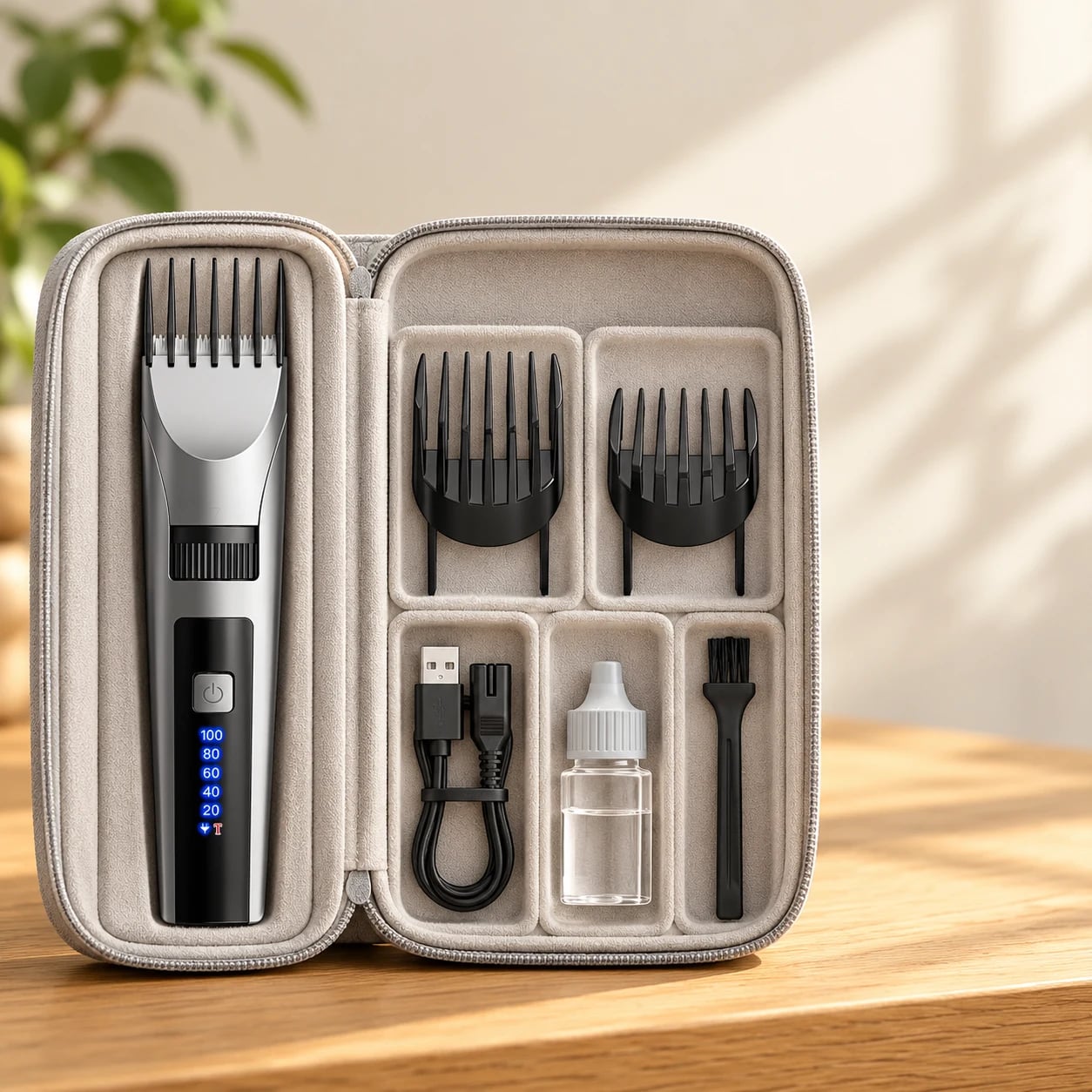
A storage pouch can make a grooming kit look settled before the project record is settled. One clipper, two guards and a few care items may be placed together for photography, a sample review or a retail layout. That scene is useful for organising a discussion, but it does not say which items are supplied, interchangeable or approved for another model.
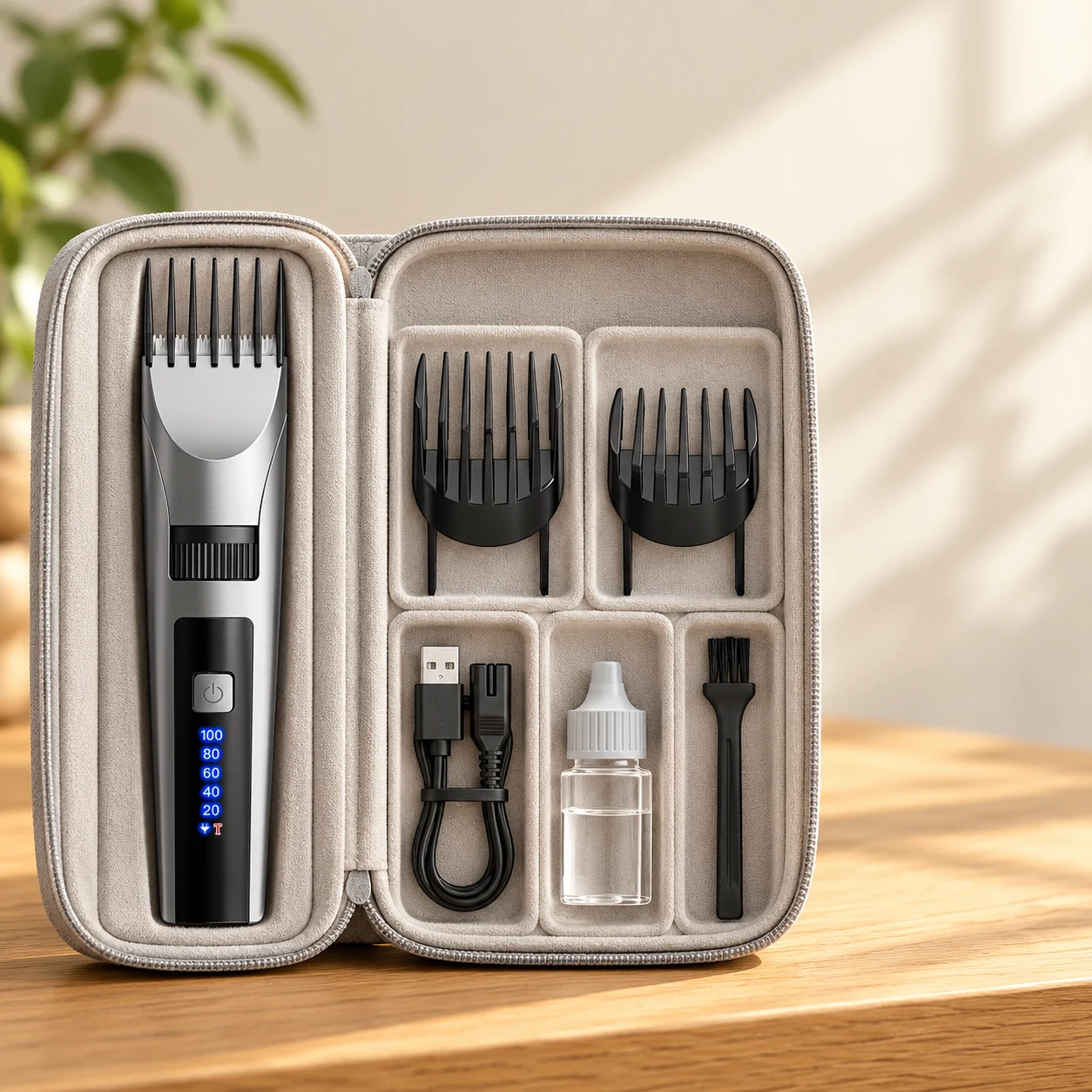
This organiser scene shows one clipper and a set of visible care items. The selected product record and project documents determine the final configuration.
Start with a kit map, not a shared-accessory claim
Give the selected model one kit map before moving any item into a storage guide, retailer image or project brief. The map has three short lines: the device identity, the items explicitly listed with it, and the items that still need a project decision. It is a documentation tool, not an instruction to share an attachment, a cleaning method or a power accessory.
The public YP-7502 hair clipper record is a practical example. It lists two adjustable length guards: Guard A at 3–11 mm and Guard B at 17–25 mm, together with a 1.0 m USB cable, oil bottle and cleaning brush. Those entries can be recorded next to the selected YP-7502 configuration. They do not prove that a guard fits a different model, that a stored item is included in every order, or that a pictured layout is an approved retail pack.
Separate the three questions a storage scene tends to blur
Which item is it? Use the model code and the exact item name from the selected record. A nearby black guard or cable is not enough to identify the configuration by appearance alone.
What is it recorded with? Keep the two stated guard ranges and the listed cable, oil bottle and brush on the same kit map as the selected clipper. If an item is absent from that record, mark it as an open question rather than silently adding it to an accessory list.
What may be said about it? Storage, photography and sales copy should describe only what the chosen record supports. Compatibility, supply status, cleaning procedure, final pack allocation, safety and market approval each need their own model-specific evidence.