When a home hair clipper brief says only "multiple lengths," the sales sample, artwork and final retail pack can easily drift apart. Start with the selected model, then record each guide guard, each on-tool setting and each included accessory in separate fields. That makes the length statement traceable instead of turning a catalogue image into a promise.
1 — Write the range exactly as the selected record states it
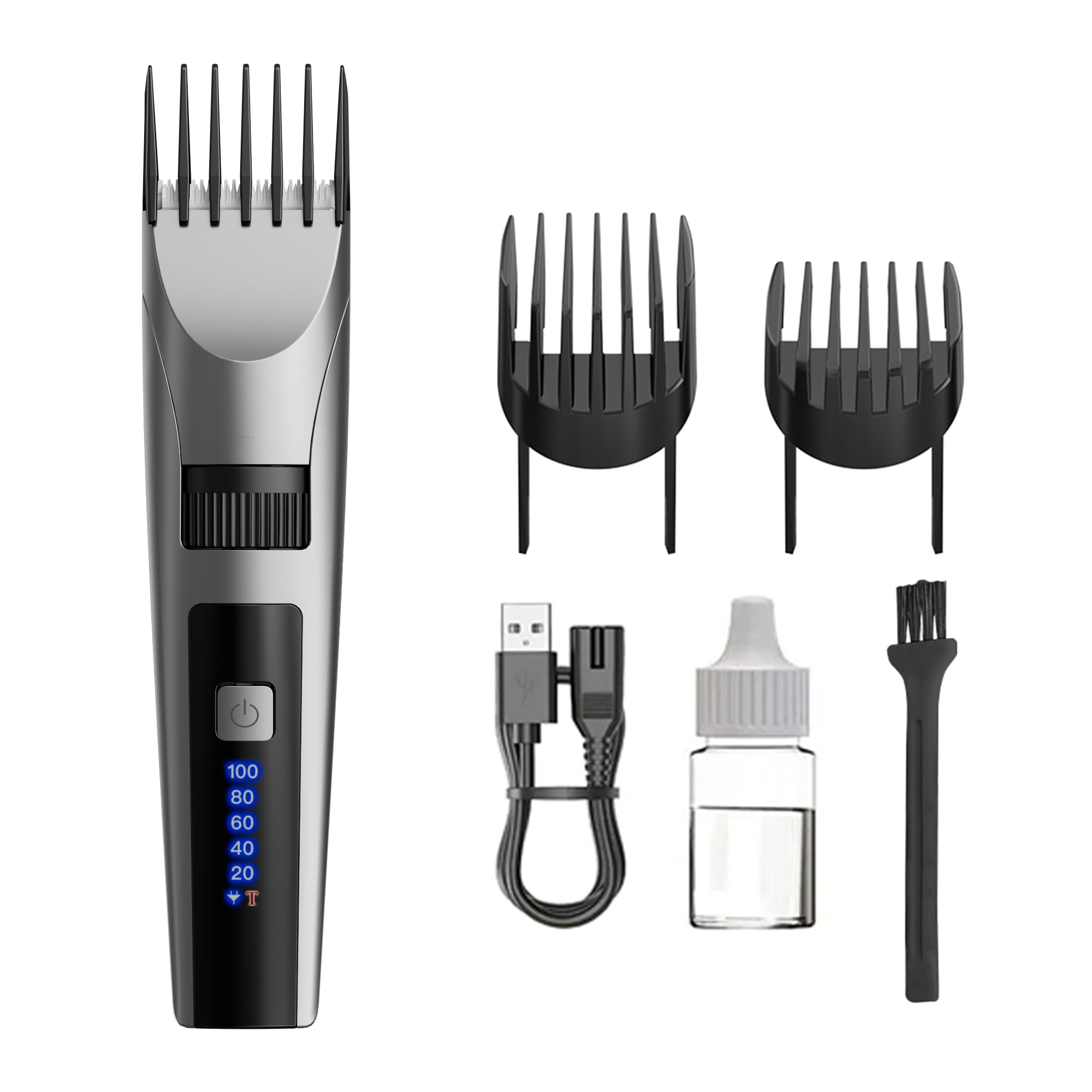
The public YP-7502 hair clipper record lists two adjustable length guards: Guard A is recorded as 3–11 mm and Guard B as 17–25 mm. Put those two ranges on separate lines in the buyer brief. Do not collapse them into a vague "3–25 mm comb" statement, because that loses which guard carries which range.
The numbers in a catalogue record are a starting field for the selected model. They do not by themselves confirm every intermediate setting, the finished hair length on every hair type, a guard's compatibility with another clipper, or the final configuration for a particular market. Those points belong in the sample and approval record.
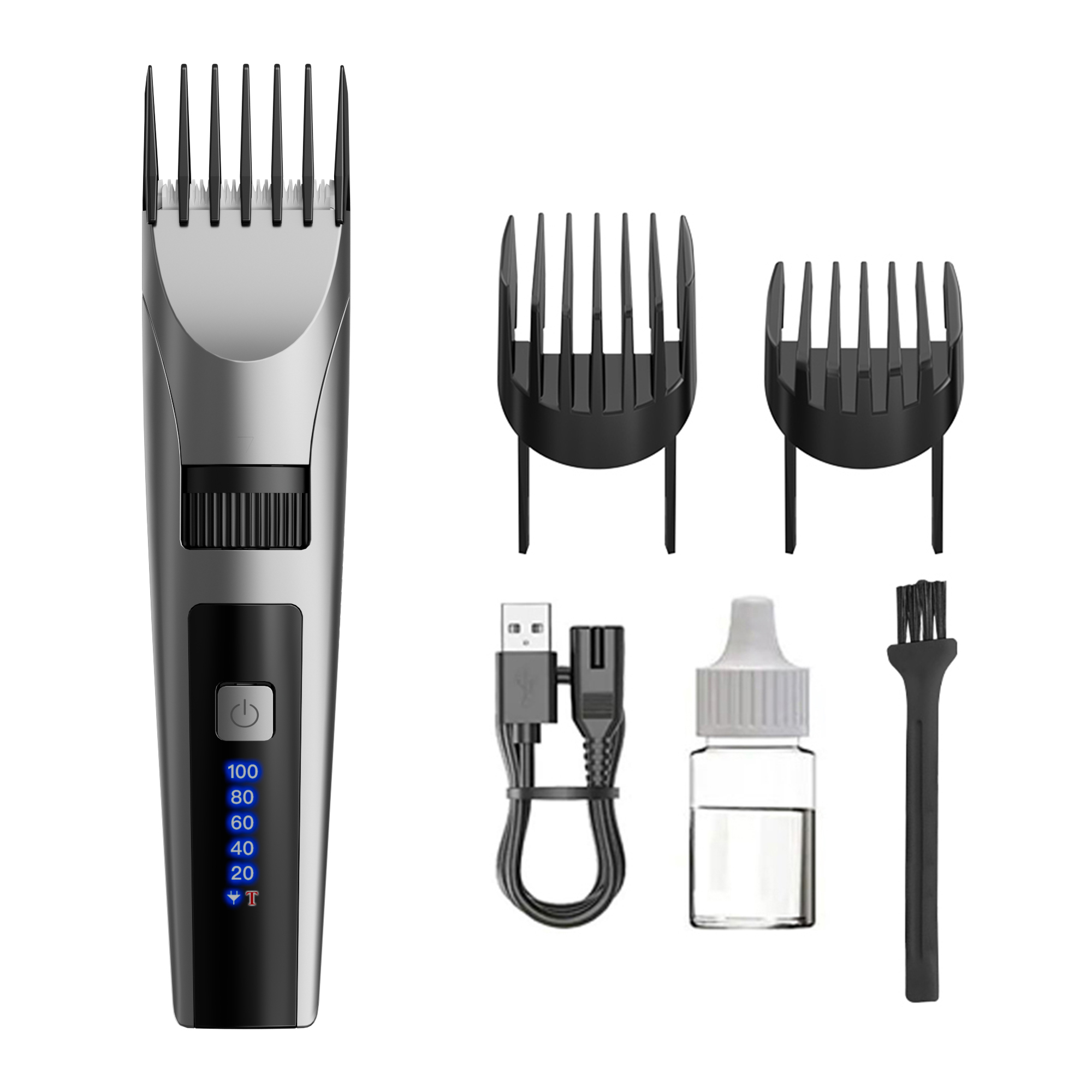
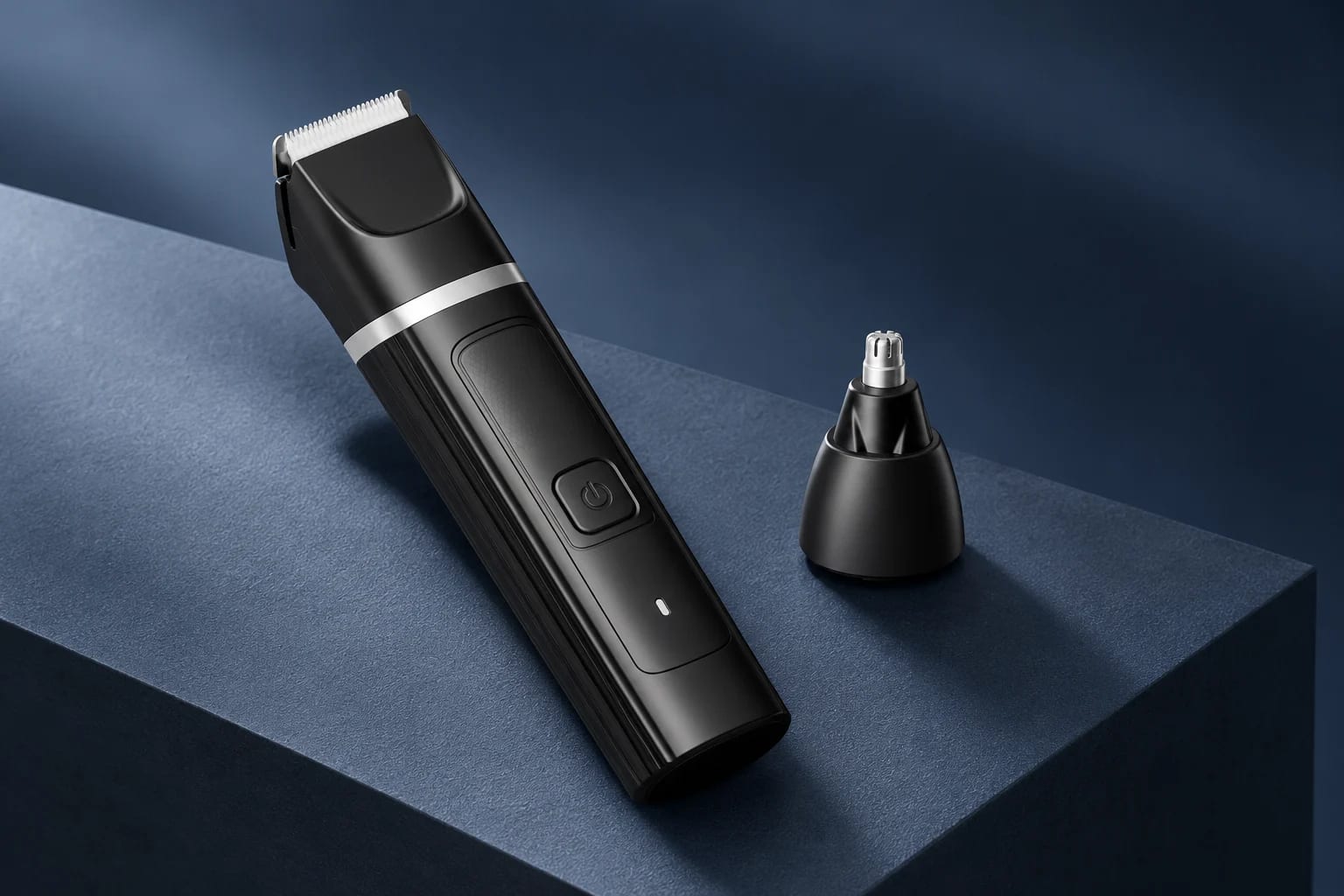
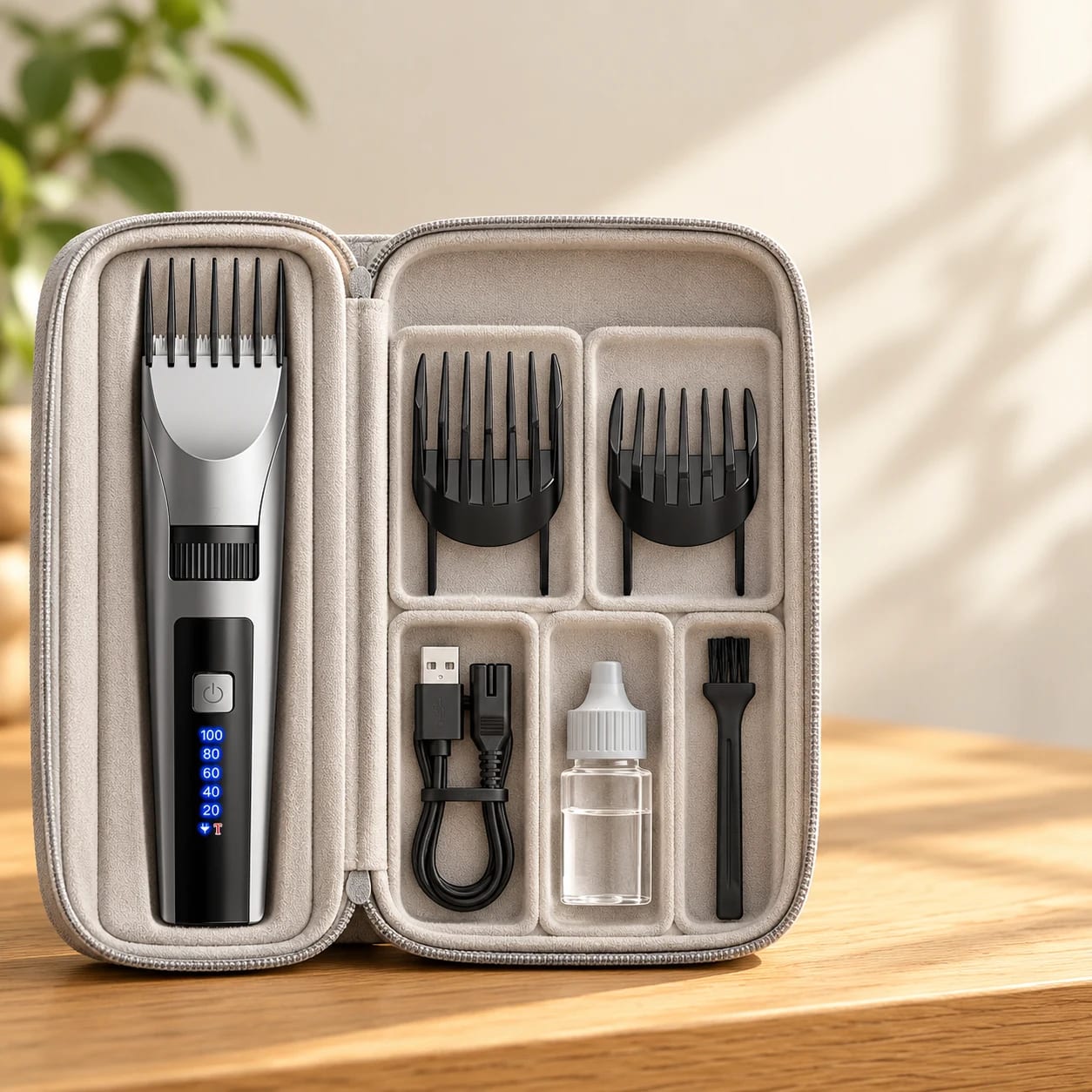
The visible guards and accessories are model-specific catalogue items. The image does not establish a length range, compatibility, test result or market claim.
2 — Keep the guard, blade and accessory fields separate
Use one line for the guide guard and a different line for any blade setting or cutting-position statement. A buyer should be able to see what is supplied, what is adjustable and what still needs sample confirmation without inferring one field from another.
| Field in the project brief | Example of a clear entry | What the buyer should still confirm |
|---|---|---|
| Reference model | YP-7502 | Confirm the model code on the sample, artwork and carton matches the approval record. |