A first sample rarely closes every decision. A buyer may request a different cutting head, housing color, comb set, cable, logo position or retail pack before the next project gate. The risk is not the change itself; it is allowing comments from email, chat, artwork and sample photos to create several competing versions. This guide helps private-label brands, distributors and project teams keep one traceable change record after an OEM grooming-appliance sample.
Fact and review note — September 4, 2026
This is an editorial process guide, checked against Unibono’s public OEM buyer brief, Factory overview, Hair Clipper Manufacturer page, product catalogue and OEM inquiry form. It is separate from the sample acceptance record: that record defines what a sample represents, while this guide controls what changes afterward. No specific model, customization, test result, certification, MOQ, price or lead time is promised here. Each requested change requires project-level confirmation.
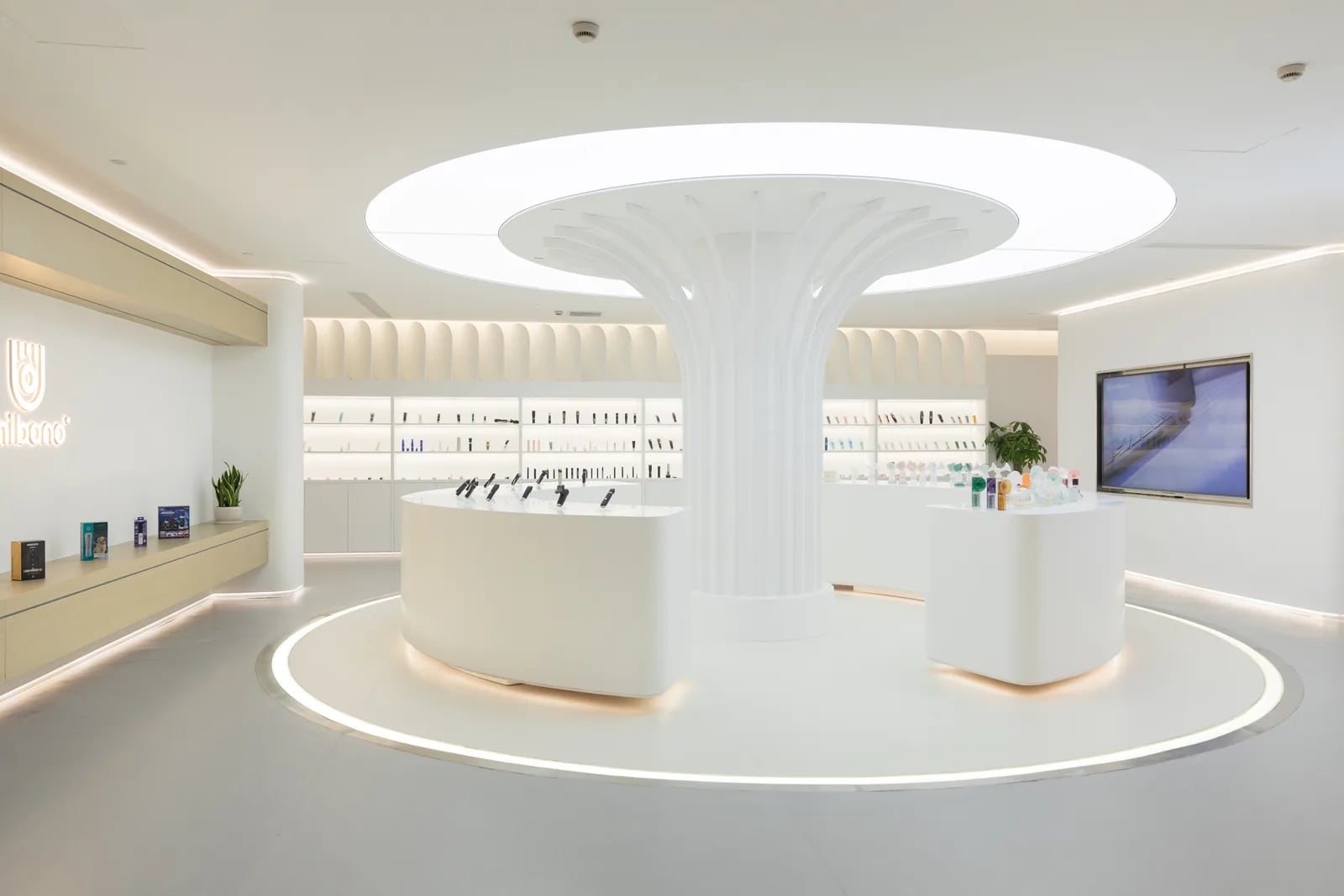
Editorial image context: an Unibono product showroom with multiple grooming-product displays. It illustrates the need to distinguish configurations; it does not show a sample revision, approval record or model capability.
1 — Freeze the baseline before asking for a change
Give the current sample a stable identity before discussing revisions: project name, reference model or platform, sample revision, receipt date, color or finish, cutting head, included accessories, charging items, logo state, packaging state and the document set used for review. Attach reference photos if useful. A request such as “make the next one black” is incomplete unless both sides can name which sample and which unchanged details it refers to.